
Message me
juliusz@blueprintsthlm.se

Leading product discovery, UX strategy, and redesign of EliteProspects.com, the world's leading ice hockey platform.
Head of UX/UI
Elite Prospects
(formerly Everysport Media Group)
Product Strategy, UX Research, UI Design, Design Systems
Product, Design, Engineering & Business Stakeholders


As Head of UX/UI at Everysport Media Group, I led product design across a portfolio of sports platforms, with a primary focus on transforming EliteProspects.com — the leading destination for ice hockey players, fans, scouts, and organizations worldwide. Working closely with product, engineering, and business teams, I introduced a user-centered product development process, established a scalable design system, and led the end-to-end redesign of the platform's experience and visual identity.
EliteProspects.com is an online hub for hockey statistics and player profiles, providing extensive data for fans, scouts, and professionals visited by 4 million unique users monthly
VISIT ELITEPROSPECTS.COM
When I joined Everysport, product decisions were primarily driven by stakeholder expertise and requests from a small group of power users.
While this approach had helped EliteProspects become the leading hockey platform, it also created several challenges:
The challenge wasn't a lack of ideas. It was deciding which opportunities would create the greatest value for both users and the business.

Before proposing solutions, I wanted the team to align on what we actually knew about our users. I facilitated workshops to map key user journeys, identify assumptions, and consolidate existing knowledge from across the organization. This work revealed several gaps between internal assumptions and actual user behavior, creating a foundation for more evidence-based decision making.


To reduce reliance on assumptions, I introduced an ongoing research practice centered around weekly user interviews and regular feedback collection. Instead of conducting research only when a project required it, we built a continuous stream of user insights that informed roadmap discussions and product prioritization.
This helped the team:


One of the biggest shifts was moving product conversations away from feature requests and toward desired outcomes.
Using Opportunity Solution Trees and collaborative discovery sessions, we connected business goals to validated user opportunities before exploring potential solutions.
This helped us focus on:
Before committing development resources, we identified the key assumptions behind each proposed solution and tested the highest-risk ideas through prototypes and user feedback.This allowed us to learn quickly, challenge our own thinking, and make informed decisions with significantly lower implementation risk.


EliteProspects attracted a large volume of recurring visitors, yet only a small percentage created accounts and even fewer converted to premium subscriptions.
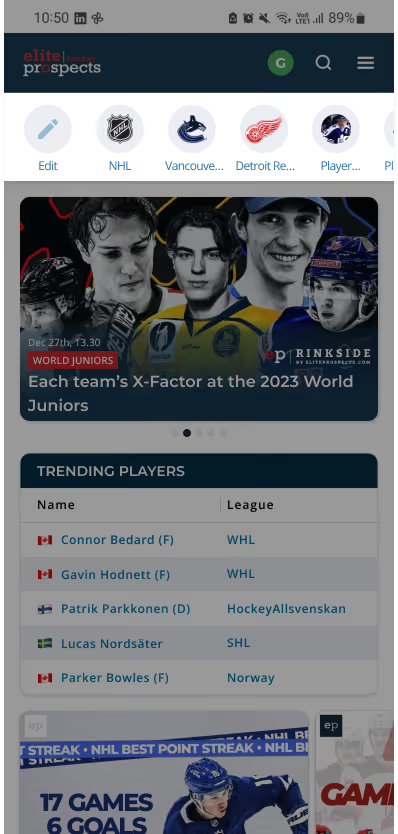
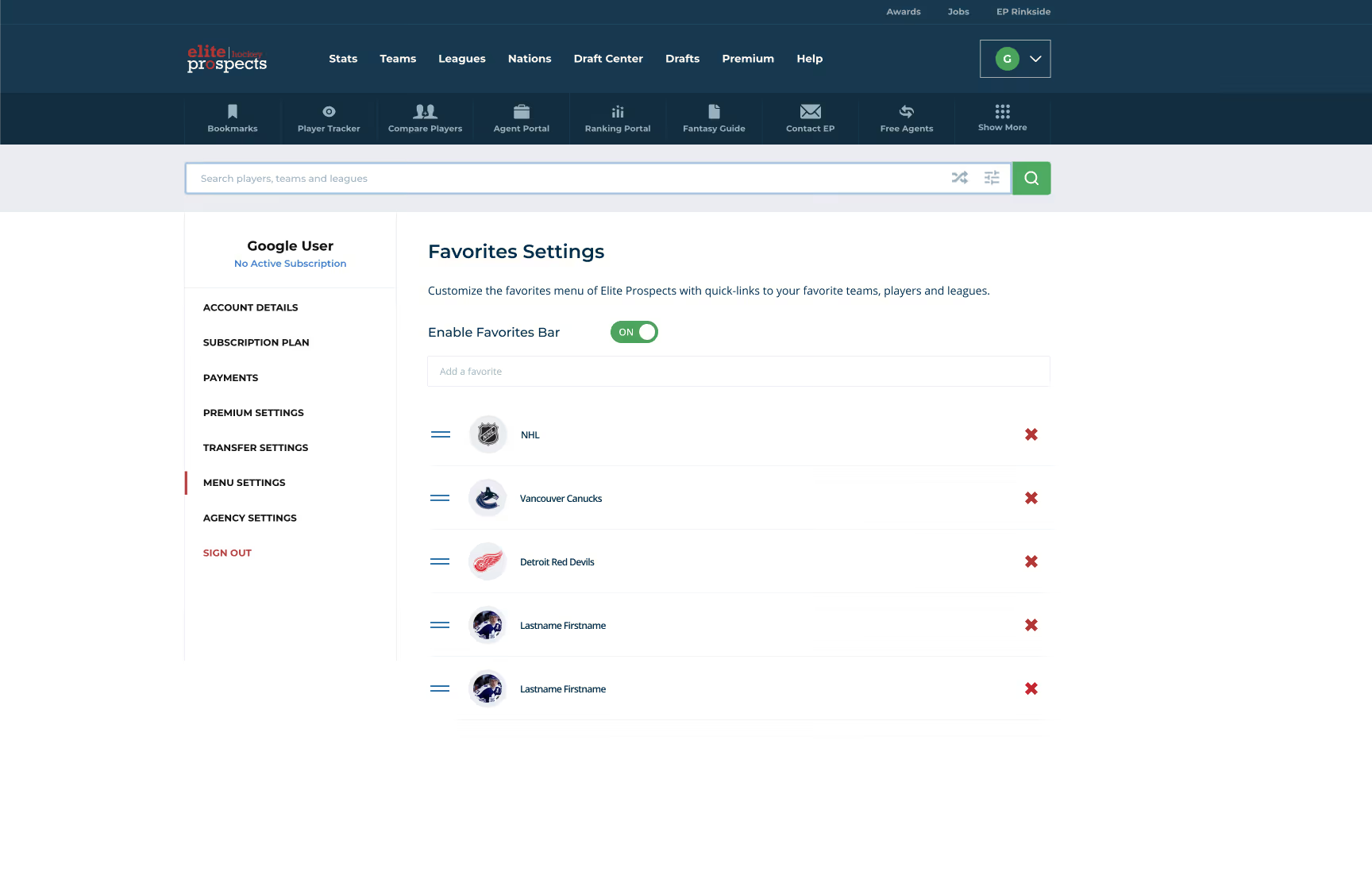
For users, the experience remained largely generic. Returning visitors had no efficient way to follow favorite players, teams, or leagues, forcing them to repeatedly navigate the platform to find the information they cared about.
For the business, the lack of registered users limited our ability to understand behavioral patterns, identify user segments, measure engagement over time, and deliver personalized experiences.
Without a stronger relationship between users and the platform, both product development and business growth relied heavily on aggregate traffic data rather than meaningful user insights.
This presented an opportunity to increase registrations by creating a more tailored product experience.
Rather than treating account creation as a standalone conversion goal, I focused on creating clear user value behind registration.
I designed a personalization ecosystem that allowed users to:
These features transformed registration from a business requirement into a useful product capability.
Alongside registration improvements, I redesigned the information architecture around the premium subscription model.
The work included:
The goal was to reduce friction while clearly communicating the value of premium membership.
To support adoption of the new personalization features, I redesigned the onboarding experience.The new flow introduced personalization from the very first interaction, encouraging users to select their interests and immediately experience the benefits of having an account. The objective was simple: demonstrate value before asking for commitment.


While acquisition and personalization were the primary focus, I also led a broader redesign of the homepage experience.
The existing homepage was heavily centered around statistics and transactional data. While valuable, it lacked the editorial and media-driven content patterns users have come to expect from modern sports platforms.
To create a more engaging destination, I introduced:
The result was a homepage that better balanced data, news, and entertainment while creating additional opportunities for engagement.