
Message me
juliusz@blueprintsthlm.se

UX research, concept design, and prototyping to establish a new design language and user experience benchmark for Jeeves ERP.
UX/UI Designer & Researcher
Jeeves ERP
UX Research, Concept Design, Prototyping, Design Systems
External Designer, In-house Designer & Product Manager

Jeeves ERP commissioned a concept redesign for one of Sweden’s most established ERP platforms — a system used daily by factory managers, production planners, and executives across manufacturing industries. Working with a small cross-functional team, I led UX research, concept design, and prototyping to establish a new design language and user experience benchmark for the product.
Jeeves ERP is one of Sweden’s most established enterprise resource planning platforms, used daily across manufacturing industries by factory managers, planners, and executives managing complex production operations.
Jeeves ERP spans over 3,500 unique programs, most of which lacked visual consistency. Design decisions had historically been driven by developers, prioritising technical solutions over usability.
The result was a fragmented interface that created real friction:
Internally, the product’s complexity and dated visual language made it harder to sell — prompting a need for a fresh design direction that would serve both users and the business.
We spoke with stakeholders across the business and studied job postings in the factory worker sector to build a picture of real users. In total we developed 12 personas, mapping how people within the industry collaborate, what motivates them, and where friction appears in their daily work.


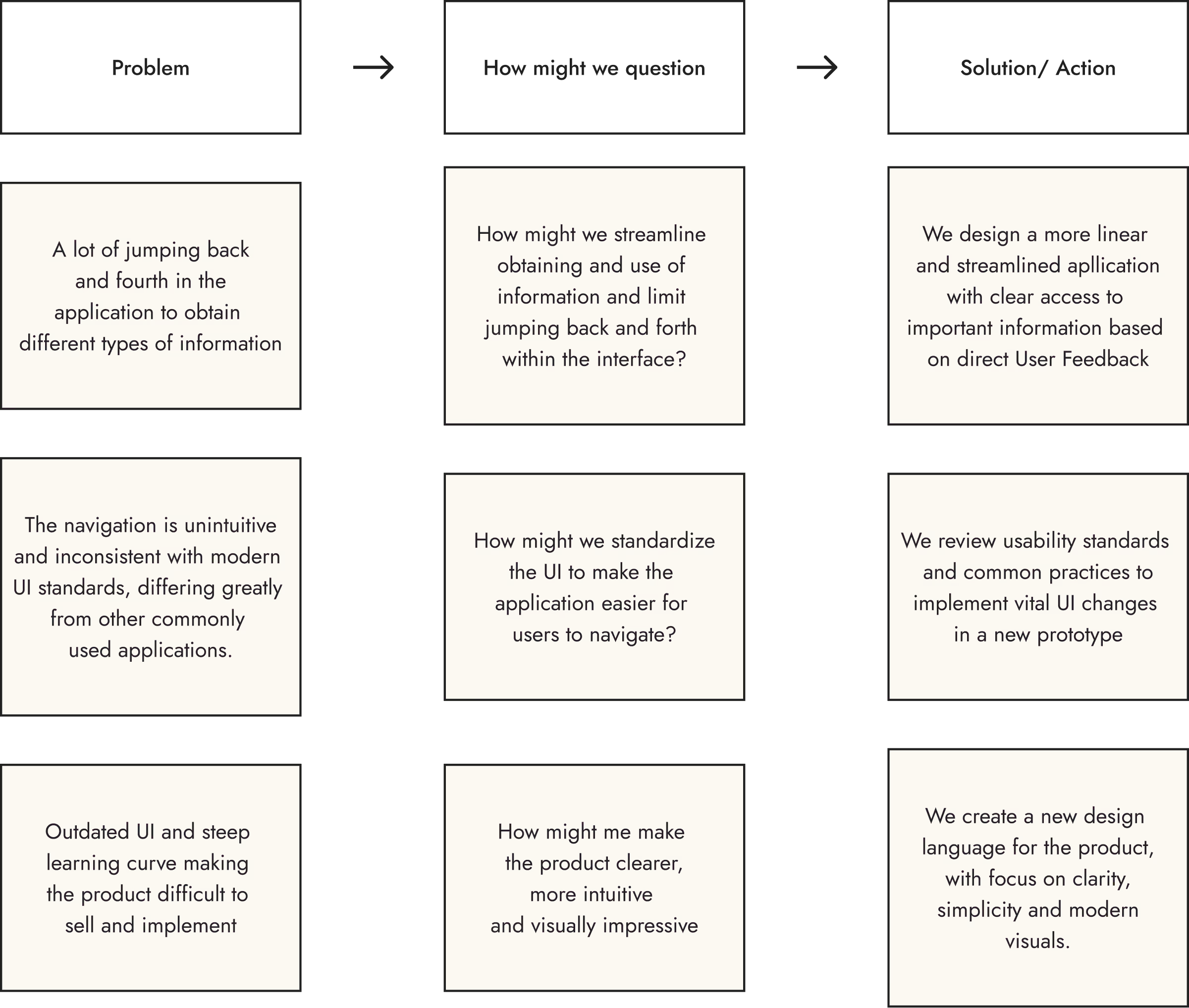
We translated our research into How Might We questions — reframing friction points as design opportunities. From six top-voted challenges, three became the core of our design direction.
The HMW questions helped us focus on:

We focused on the production sector — a core revenue driver for Jeeves — and structured the prototype around a factory manager’s typical working day.
The story unfolded across 12 stages in three chapters, each chosen to showcase the design decisions with the greatest impact within the time and resource constraints available.
The three chapters:
Rather than solving for every pain point, the team made a deliberate choice: tell a story. With limited time and stakeholders expecting a compelling vision, we prototyped a full day in the life of a factory manager — showing the product in action across real, recognisable moments across Morning, Afternoon and Evening.

We worked with the team at Blueprint to create a visual concept for the vision of a new ERP experience. Both Victor and Juliusz have a great ability to quickly translate domain specific user needs into solutions, and the results of their work brought clarity and alignment to our plans and efforts to improve our products.
Christian Schreil
Product manager, Jeeves ERP

The factory manager starts her day with a dashboard designed for total situational awareness. Every data point was determined through research and direct conversations with domain experts. We stripped back label-heavy layouts in favour of icons, loading bars, gauges, and visual indicators — reducing clutter and enabling faster back-and-forth navigation. Each element is tappable, letting the user drill down into richer data without losing the overview. The dashboard surfaces factory performance, production progress, material stock levels, line leader status, and risk notifications.


A key pain point was the lack of effective tooling for gathering and exchanging information before and during planning meetings.
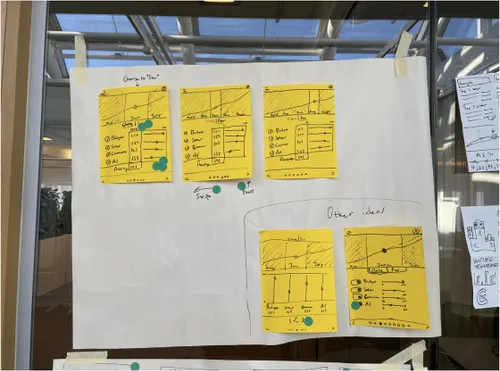
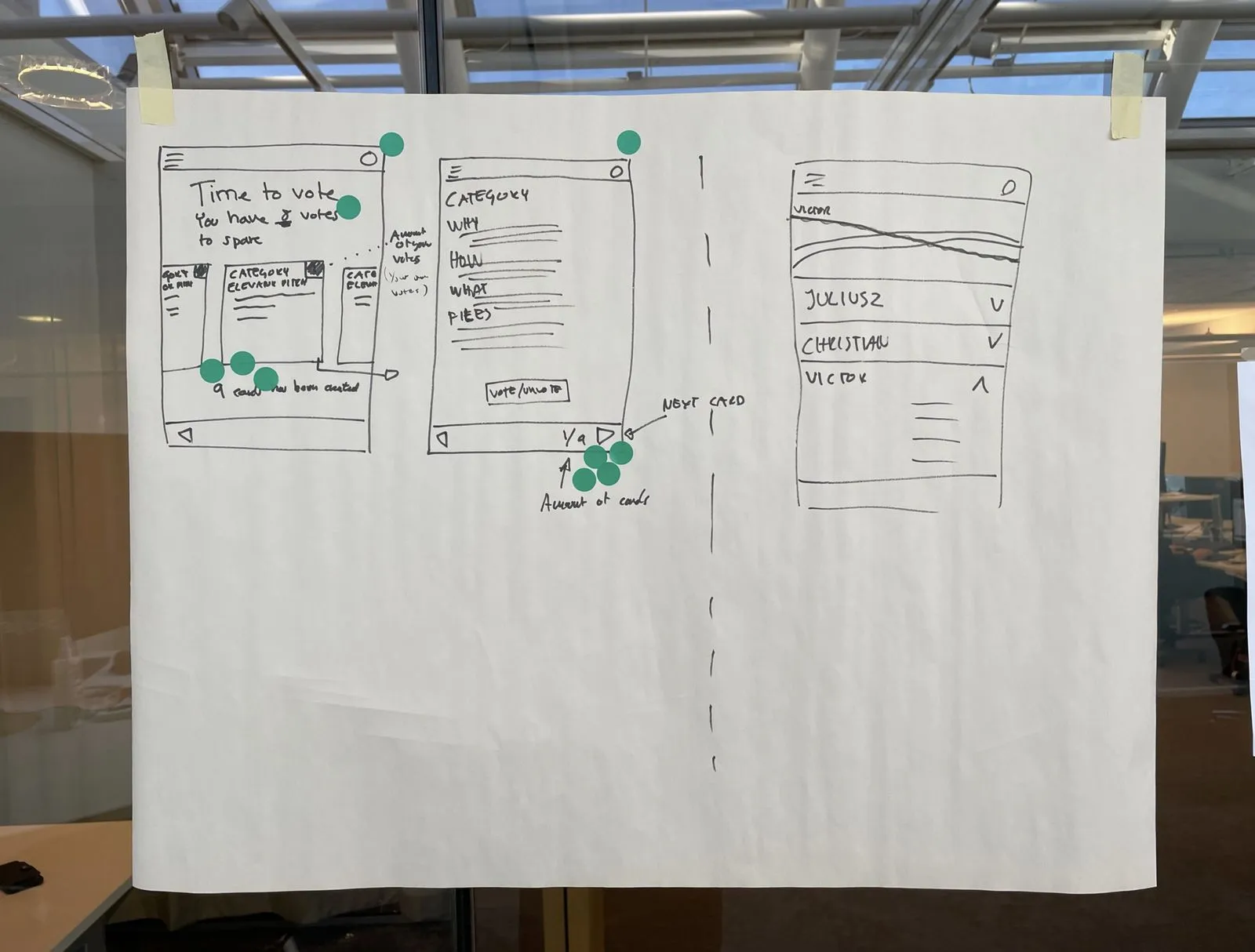
We prototyped a structured flow for presenting insights and introduced an anonymous voting feature to democratise decision-making. As a member of the Forecast Council, the manager prepares insights ahead of weekly meetings, presents findings, and votes on key product categories — contributing directly to strategic decisions. The flow included:
The flow was scoped in a collaborative workshop and validated with internal stakeholders before entering the prototype.


Back at her desk, the factory manager uses the desktop interface to analyse the production plan in detail. Simplified navigation and reduced visual clutter were central — we introduced focused overlays that let users drill into specific data without losing context of the broader picture.
Leaving the office, the manager checks the daily production report on her phone. The prototype also introduced a voice-activated assistant concept:
With a single voice command, the system confirms all schedules and inventory levels are set for the following day.


The final prototype set a new standard for Jeeves ERP, establishing a new design language and components system that standardized the UI with contemporary guidelines and best practices. Showcased in a commercial film, the prototype received positive feedback internally and externally, prompting Jeeves ERP to advance the product. The project's success was reflected in the positive reception of the prototype and its broader impact. It educated colleagues on the benefits of design thinking, leading to its adoption across other teams. The team recognized the need for buffer time, managing expectations, and embracing a "good enough" mindset to ensure timely delivery without compromising quality. This project marked a significant step in making Jeeves ERP more intuitive and user-friendly, setting a new benchmark for the company's future products.